



Safety management is an essential system used by organizations to ensure the health and safety of employees in the workplace. It involves identifying potential hazards, assessing risks, and implementing effective control measures to prevent accidents and injuries. In industries such as construction, manufacturing, oil and gas, and mining, safety management plays a critical role in maintaining a secure working environment.
Safety management refers to the organized approach used by companies to control workplace hazards and protect workers from harm. It includes policies, procedures, training, and monitoring systems designed to reduce risks and ensure compliance with safety regulations.
A well-structured safety management system helps organizations identify unsafe conditions and correct them before accidents occur. It also encourages employees to follow safety rules and adopt safe work practices.
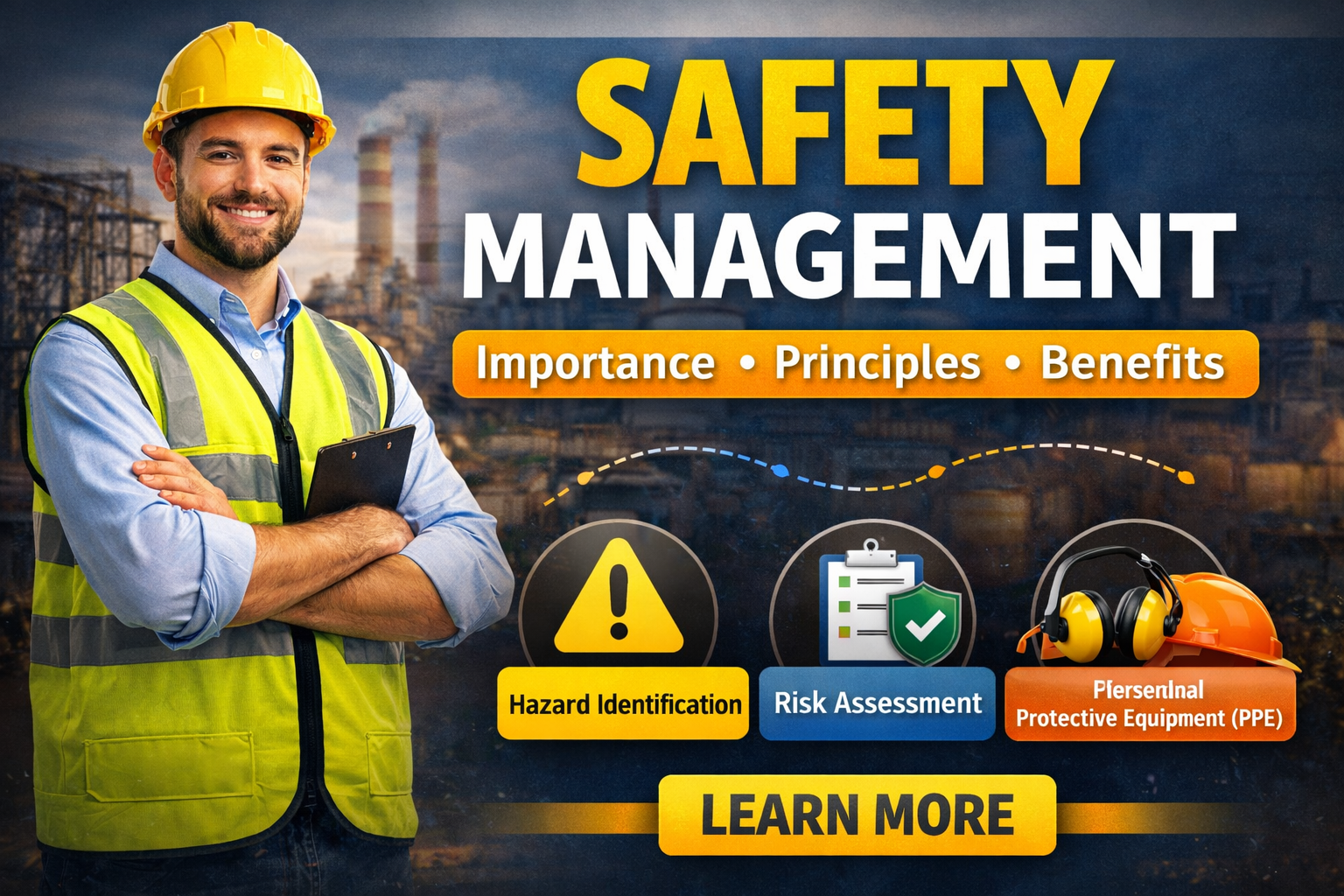
Hazard Identification
The first step in safety management is identifying hazards in the workplace. Hazards may include unsafe machinery, chemicals, electrical risks, or poor working conditions.
Risk Assessment
After identifying hazards, organizations evaluate the level of risk involved. Risk assessment helps determine the likelihood of an accident and its possible impact.
Safety Training
Employees must receive proper training on safety procedures, emergency response, and the correct use of equipment. Training ensures workers understand how to prevent accidents.
Use of Personal Protective Equipment (PPE)
PPE such as helmets, gloves, safety shoes, goggles, and protective clothing helps reduce the risk of injury.
Accident Investigation
When accidents occur, it is important to investigate the cause and implement corrective actions to prevent similar incidents in the future.
Safety management is important because it protects employees, reduces workplace accidents, and improves productivity. A safe working environment boosts employee confidence and helps organizations avoid legal issues and financial losses.
In addition, many governments require industries to follow safety regulations and standards. Companies that implement strong safety systems demonstrate responsibility and professionalism.
Reduces workplace accidents and injuries
Improves employee morale and productivity
Ensures compliance with safety laws and regulations
Protects company reputation
Reduces financial losses due to accidents
Safety management is a vital part of every organization, especially in high-risk industries. By identifying hazards, assessing risks, and providing proper training, companies can create a safe and healthy workplace for employees. Effective safety management not only protects workers but also contributes to long-term business success.